The Legacy of Faika and Hamdoon
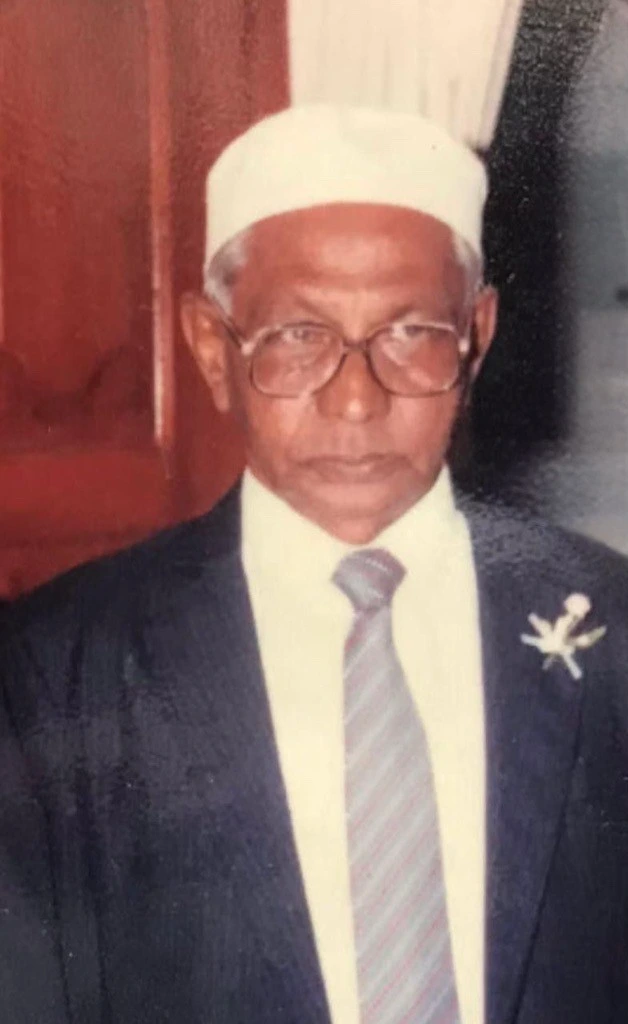
The Late Haji Mohamed Hamdoon
Haji Mohamed Hamdoon was born on 9 January 1921, into a world that asked more of him than it asks of most children. He was only six years old when he lost his father, and it fell to his older brothers to raise him. This early lesson in loss, responsibility and care shaped the man he became: someone who understood, from childhood, what it meant to hold a family together.
He first attended Malharus Sulhiya National College in his hometown of Thalapitiya in Galle Four Gravets, Galle, before moving to Zahira College in Colombo, over 120 km away, where he also boarded. At a school that brought together students from across the island, the boy who had lost so much found his footing. Playing a variety of sports but particularly as a ruggerite, he learned the discipline of teamwork and the joy of belonging to something larger than himself.
Hamdoon was the youngest of five children. His eldest brother, Mohamed Ahamed Barry (1905–1960), was followed by Haji Muhammad Ahamed Ijilan (1909–1983) and Haji Mohamed Ahamed Zinoon (1911–1974). Their love and protection would go on to shape the foundations of his life. He also shared a deep and special bond with his sister, Fathima Zohora Ali (1908–1984), to whom he remained very close throughout his life.
In later years, as his brothers passed away one by one, the mantle of family responsibility came to rest on him. He accepted it without complaint. The nieces and nephews who had once looked to their fathers for guidance found in him the same protection and affection. The responsibility of giving them away in marriage fell to him, and he carried it with dignity. Until his death, he remained a father to the whole clan.
They called him “Sinna Chachcha” on his side of the family, as he was the youngest uncle, and “Periyappa” on his wife’s side, as he was the eldest. To the entire clan, however, he became something far larger: a father figure, the steady hand everyone could reach for. When nephews struggled to find work, he helped them secure employment. When they needed advice, he was there. When decisions had to be made, his voice mattered. He did not need to demand respect; he earned it through the way he lived. And the love came back to him in its own quiet, joyful way. His nieces and nephews, grown and grateful, would gift him shirt after shirt, until his wardrobe overflowed with the affection of a family he had spent his life holding together.
By profession, Hamdoon was a Manager at Premadasa & Co., where he was known for his integrity and sense of duty. By temperament he was a man who answered to no one but his conscience. He had an independent spirit and a strong sense of honour. He never wanted to be in debt to anyone and carried himself with a self-respect that was unmistakable. Yet this independence never made him distant. He gave freely, loved deeply and remained rooted in family until his last breath.
Hamdoon was also a man of deep faith who performed Hajj twice. He raised two daughters and was blessed with two grandchildren who adored him without condition, the kind of love that asks nothing and gives everything, the same love he had spent his whole life extending to others.
Haji Mohamed Hamdoon passed away on 9 October 1998, having lived a life illuminated by devotion, sacrifice and an unshakable sense of duty to the people he called his own. But for those who knew him, he did not simply leave. He remained: in the marriages he blessed, the livelihoods he helped create, the family bonds he held together, the prayers said in his name and the stories still told with love.
His life was one of quiet greatness. Not the kind that seeks attention, but the kind that becomes the foundation on which others build their own lives. Through the Faika & Hamdoon Endowment, that spirit of generosity and care continues, extending dignity and support to those in need, just as he did throughout his own life.
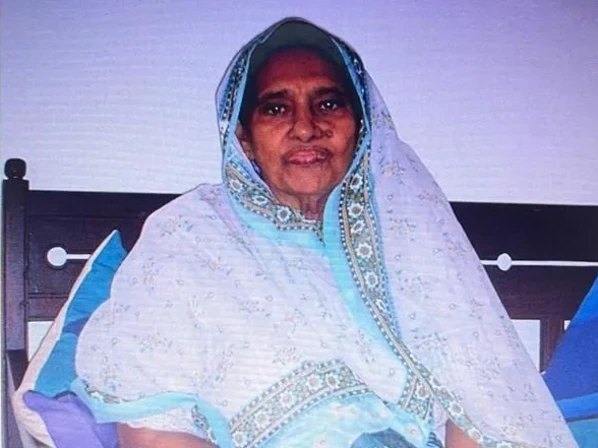
The Late Hajiya Jennathul Faika Hamdoon
Hajiya Jennathul Faika Hamdoon was born on 10 July 1930, into a family that would come to call her "Periya Umma," for being the eldest aunt, and a gentle counterpoint to the husband she would one day marry. She was the youngest of her own siblings, earning her the epithet “Sinna Chachchi” (small aunt) on her side of the family.
Born and raised in Thalapitiya in Galle Four Gravets, Galle, Faika was the oldest of four siblings. Her brother, Mohamed Junaid Mohamed Mahboob (1933– 2002) and sisters Hajiya Zainambu Raliya Salahudeen (1940-2010) and Athiyahanim Fathima Ameera Mubarak (1940–2008), shared with her the bonds of a childhood that would carry into a lifetime of closeness.
If Hamdoon was the steady hand the wider family reached for, Faika was the quiet engine that kept the household itself running. She managed her home with a generosity that never seemed to run dry, and she doted on her grandchildren with the particular tenderness of a woman who saw caring for them not as duty but as joy. When their parents were away, she stepped in without hesitation: feeding them, watching over them and wrapping them in the same warmth she gave everyone who came through her door.
Her faith was not something she kept to herself; it was something she planted, patiently and early, in the children around her. She would wake her grandson before dawn for Subah prayers, and knowing how cold the water would be at that hour, would boil it herself so he could make wudu (ablution) in comfort. It was a small act, repeated countless mornings, and it said everything about how she loved: practically, faithfully and without ever needing to be asked. During Ramadan, she rose earlier still, preparing fresh meals for Sahr (the pre-dawn meal before the fast) so that the family could begin each fasting day nourished and cared for.
Among the women of her family and her community, she was a source of barakah (blessings). She led prayers and recitals for them, and those who heard her recite remember the emotion she brought to it, a depth of feeling that moved people, making the words felt as much as heard. She was, by all accounts, a deeply spiritual woman, and she completed Hajj in her lifetime, a pilgrimage that only deepened the faith she had already spent her life practising and passing on.
Hajiya Jennathul Faika Hamdoon passed away on 3 July 2013, but the faith she instilled in her grandchildren did not leave with her. It remains in every prayer they were taught to say, every teaching she passed down, every memory of her everyday acts of devotion.
Her life, like her husband's, was one of quiet devotion: care given not for recognition but because it was simply who she was. Through the Faika & Hamdoon Endowment, that same spirit of generosity and compassion now reaches those in need, carrying her name, and his, into the lives of people they never met but would surely have wanted to help.